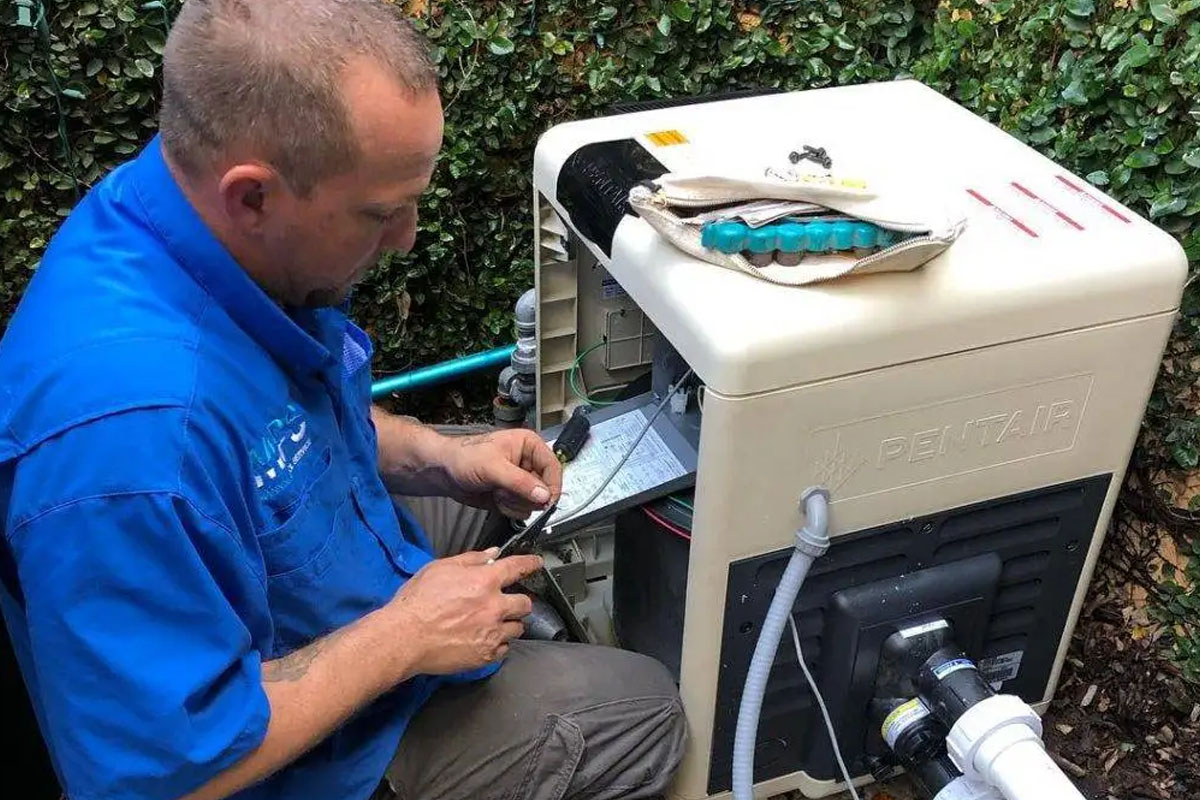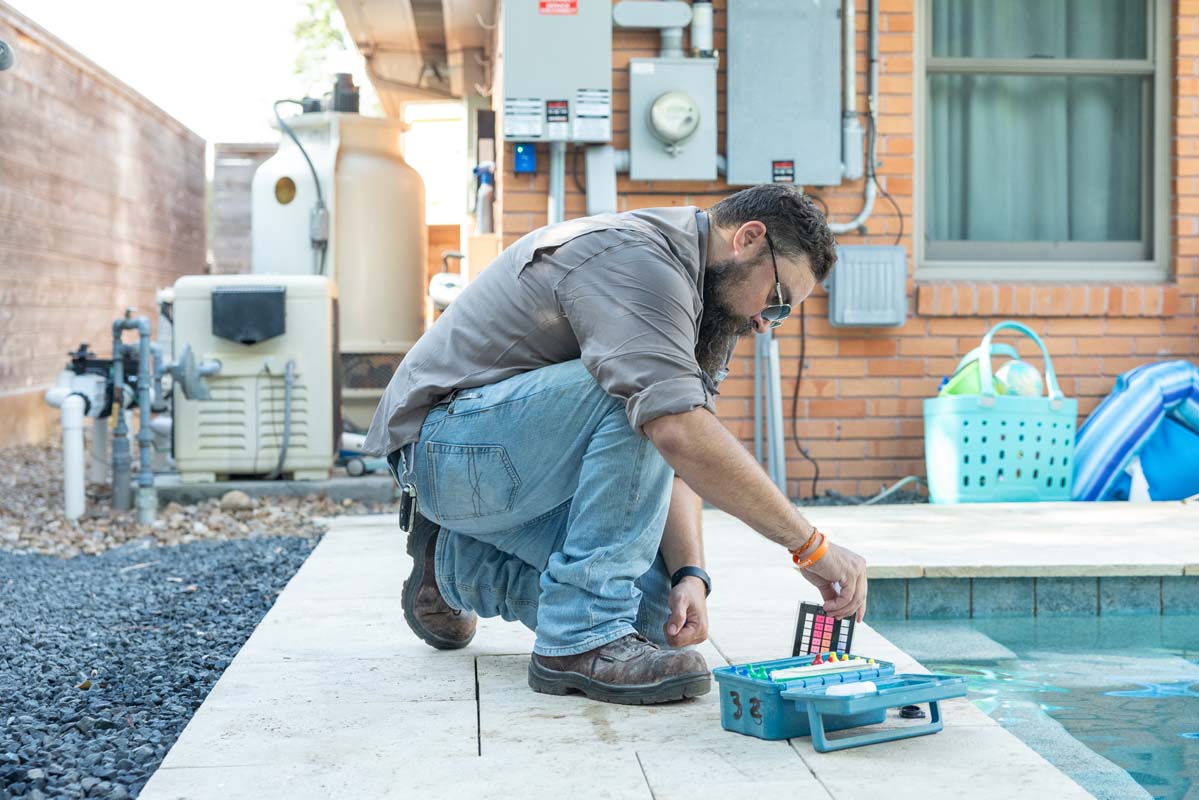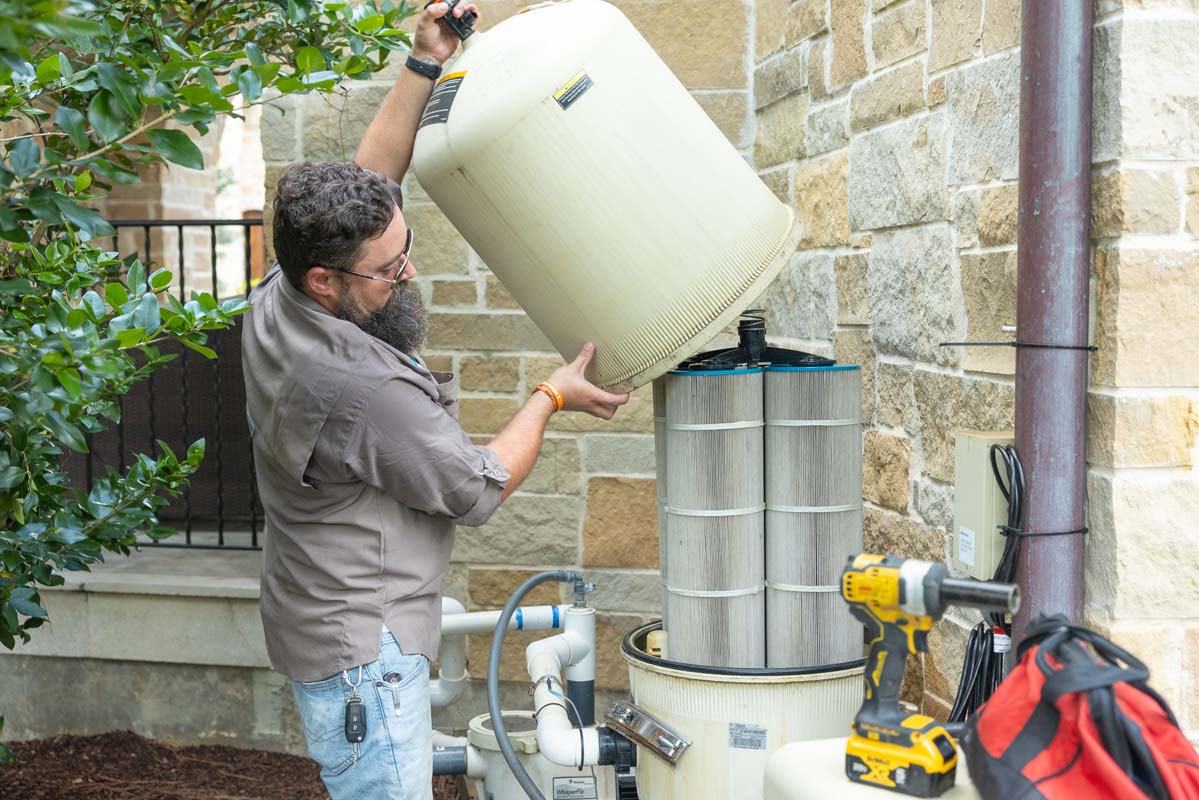

Owning a pool in Houston means year-round enjoyment—but also year-round responsibility. Between scorching summers, sudden storms, and occasional cold snaps, Houston pool maintenance is unique. Use this seasonal pool care guide and pool maintenance checklist to keep your water clear, safe, and ready for swim season. If you’d rather leave it to the pros, consider a weekly pool service Houston homeowners rely on to stay ahead of weather-driven issues.
Why seasonal pool care matters in Houston
- Heat and UV are intense: Chlorine burns off faster, algae grows quicker, and evaporation is higher.
- Heavy rains and storms: Sudden dilution throws off chemistry and floods pools with debris and phosphates.
- Pollen and leaves: Spring oak pollen and fall leaf drop clog filters and feed algae.
- Mild winters with rare freezes: You don’t typically “close” a pool, but you do need freeze protection and light off-season care.
Target water chemistry (general ranges)
- Free Chlorine (FC): 2–6 ppm (maintain 5–7% of CYA; higher end in summer)
- pH: 7.4–7.6 (acceptable 7.2–7.8)
- Total Alkalinity (TA): 60–90 ppm (lower end for salt pools)
- Calcium Hardness (CH): 200–400 ppm for plaster; follow your surface specs
- Cyanuric Acid (CYA): 30–50 ppm for liquid/manual chlorination; 60–80 ppm for saltwater generators (SWG)
- Salt (if SWG): Per manufacturer, commonly 3000–3500 ppm
Spring checklist: Wake-up and pollen control
- Deep clean:
- Skim, brush walls and tile line, vacuum thoroughly.
- Empty skimmer and pump baskets; clean cleaner canisters.
- Balance chemistry:
- Test and adjust pH, TA, CH, and CYA after winter rains.
- Bring FC to target; consider a light SLAM if winter algae is present.
- Filter and equipment:
- Clean or backwash the filter; deep-clean cartridges or recharge DE as needed.
- Inspect pump lid o-ring, lube if needed; check for air leaks and prime the system.
- Inspect salt cell and clean if scaled (use manufacturer method).
- Pollen strategy:
- Run pump longer during peak pollen; use skimmer socks to catch fines.
- Consider enzymes to break down oils and organics from spring usage and pollen.
- Safety and hardware:
- Check ladders, rails, diving boards, and lighting; test GFCI outlets.
- Verify drain covers are secure and VGBA-compliant.
- Prep schedule:
- Increase run time toward 8–10 hours/day as temps climb.
- If you use trichlor tabs in spring, monitor CYA so it doesn’t creep too high.
Summer checklist: Heat, UV, and algae prevention
- Chlorine and CYA management:
- Keep CYA in range for your chlorination method to protect FC from Houston sun.
- Maintain FC on the higher end of target; test 2–3x per week.
- Circulation and run time:
- Run pump 10–12 hours/day (longer during heat waves); ensure all features get flow.
- Point returns to create a gentle circular flow; brush dead spots weekly.
- Filtration and cleaning:
- Backwash sand/DE when pressure rises 20–25% above clean; rinse cartridges as needed.
- Vacuum or use a robotic cleaner 1–2x weekly; empty skimmer baskets frequently.
- Scale and pH control:
- Warm water drives pH up; check pH every few days.
- Watch for scale on tile line and salt cell; maintain CSI near zero to slightly negative.
- Evaporation and top-offs:
- Keep water level mid-skimmer; top off after evaporation.
- Retest and rebalance after top-offs and storms.
- After summer storms:
- Remove debris quickly; run pump continuously for 24–48 hours if needed.
- Shock to high end of target; add clarifier only if needed; consider phosphate remover if levels spike.
Fall checklist: Leaves, organics, and cooler nights
- Debris control:
- Use a leaf canister on suction cleaners; skim and net more often during leaf drop.
- Consider a leaf cover or temporary net if trees are heavy shedders.
- Chemistry adjustments:
- As water cools and bather load drops, chlorine demand decreases—dial chlorination down gradually, not abruptly.
- Recheck TA and CH; rain dilution can shift balance.
- Filter maintenance:
- Do a thorough filter cleaning at the end of leaf season to restore flow.
- Run time:
- Reduce to 6–8 hours/day as temperatures decline while maintaining good circulation.
- Prevent fall algae:
- Brush weekly; maintain FC in range.
- Optional: Polyquat 60 algaecide before an extended absence.
Winter checklist: Mild off-season with freeze awareness
- Keep it running:
- Most Houston pools do not fully winterize. Use freeze protection mode if available; run pumps during near-freezing temps.
- Monthly chemistry:
- Test 1–2x monthly; maintain pH, TA, and a low but safe FC. CYA may drift lower with rain—adjust in spring.
- Equipment care:
- Inspect seals and unions; clean salt cells and heaters per schedule.
- If a hard freeze is forecast and power may be lost:
- Turn off breakers, drain pump, filter, heater, and above-grade pipes using drain plugs.
- Insulate exposed pipes/valves; cover equipment from wind, not air-seal it.
- Keep it clean:
- Skim and brush periodically; empty baskets to prevent clogging.
- If you use a cover, keep it clean and properly tensioned; pump off standing water.
Hurricane and major storm prep (Houston-specific)
- Do not drain the pool to “make room.” The groundwater table can float a shell.
- Balance and pre-treat:
- Bring FC to upper target, add Polyquat 60, lower pH to ~7.2 before the storm.
- Secure:
- Remove loose furniture; secure lids and autofill covers; turn off gas to heaters.
- If you expect extended outage, turn off breakers ahead of time to protect equipment.
- After the storm:
- Remove debris, restore circulation, test and rebalance, and clean filter thoroughly.
Weekly pool service Houston: When to call the pros
If you’re short on time or want expert eyes on your equipment, a weekly pool service Houston homeowners trust can:
- Keep your chemistry dialed to our climate and bather load.
- Catch small issues early (leaks, air ingress, failing capacitors, scaling salt cells).
- Handle deep cleans, filter breakdowns, and storm recovery efficiently.
Quick pool maintenance checklist by season
- Spring:
- Deep clean and brush; clean/backwash filter
- Balance full chemistry; inspect salt cell and equipment
- Manage pollen; increase run time
- Summer:
- Test FC/pH frequently; keep CYA in range
- Run pump longer; vacuum/robot 1–2x weekly
- Control pH/scale; react fast after storms
- Fall:
- Step up leaf removal; end-of-season filter clean
- Gradually reduce chlorination and run time
- Maintain brushing and FC to prevent algae
- Winter:
- Use freeze protection; monthly chemistry checks
- Periodic skimming/brushing; equipment inspection
- Know how to drain equipment if power fails in a hard freeze
Pro tips for Houston pool maintenance
- Match chlorination to CYA: Avoid relying on trichlor tabs long-term; they raise CYA. Use liquid chlorine or a well-maintained SWG for steady control.
- Track filter pressure: Note clean-start PSI and backwash/clean at 20–25% over baseline.
- Brush weekly, year-round: It’s the simplest algae prevention.
- Keep records: A logbook or app for test results and maintenance helps spot trends.
Whether you DIY with this seasonal pool care plan or hire a weekly pool service Houston neighbors recommend, such as Manning Pool Service, staying ahead of weather and water chemistry will keep your pool sparkling—and your maintenance stress low. Save this post as your go-to pool maintenance checklist and enjoy crystal-clear swimming in every season.