
Few things are more frustrating than walking outside, ready for a swim, only to find your pool has turned an uninviting shade of green. Whether the discoloration appeared overnight or developed gradually over several days, green pool water is one of the most common issues pool owners face, especially during Houston’s long, hot swimming season.
The good news is that a green pool is usually recoverable with the right approach. Understanding what causes the problem and how to address it quickly can help you restore clear, healthy water while preventing the issue from happening again.
Why Is My Pool Green?
One of the first questions homeowners ask is, why is my pool green?
In most cases, the answer is algae. Algae are microscopic organisms that thrive in warm, sunlit water when sanitizer levels drop too low. Houston’s high temperatures and humidity create ideal conditions for algae growth, making routine maintenance especially important.
However, algae are not the only possible cause. Green water can also result from:
- Low chlorine levels
- Poor water circulation
- Imbalanced water chemistry
- Dirty or clogged filters
- Heavy rainfall
- Organic debris such as leaves and pollen
- Metals, such as copper, in the water
Identifying the underlying cause helps determine the fastest and most effective treatment.
Green Pool Water in Houston Is Especially Common
Green pool water in Houston is a frequent issue because the local climate encourages rapid algae growth.
Several regional factors contribute to the problem:
- High summer temperatures
- Frequent afternoon thunderstorms
- Heavy pollen during spring
- Long swimming seasons
- Large amounts of organic debris after storms
Even a few days without proper sanitation during peak summer can allow algae to multiply quickly.
Signs That Algae Is the Culprit
Not every green pool looks the same.
Early algae growth may appear as:
- Slight green tint
- Cloudy water
- Slippery pool walls
- Green patches on steps or corners
As algae spreads, the water often becomes darker, visibility decreases and surfaces become increasingly slippery.
If left untreated, algae can overwhelm the pool’s filtration system and require much more extensive cleaning.
Test the Water First
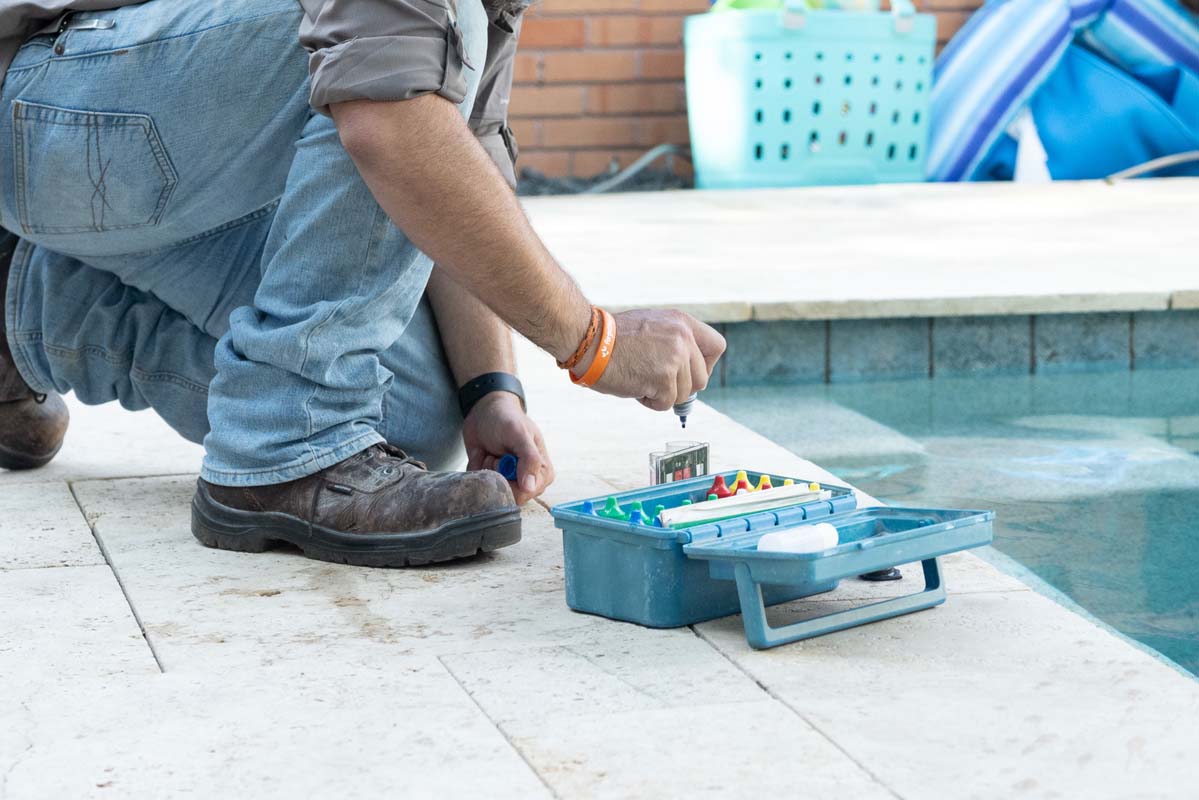
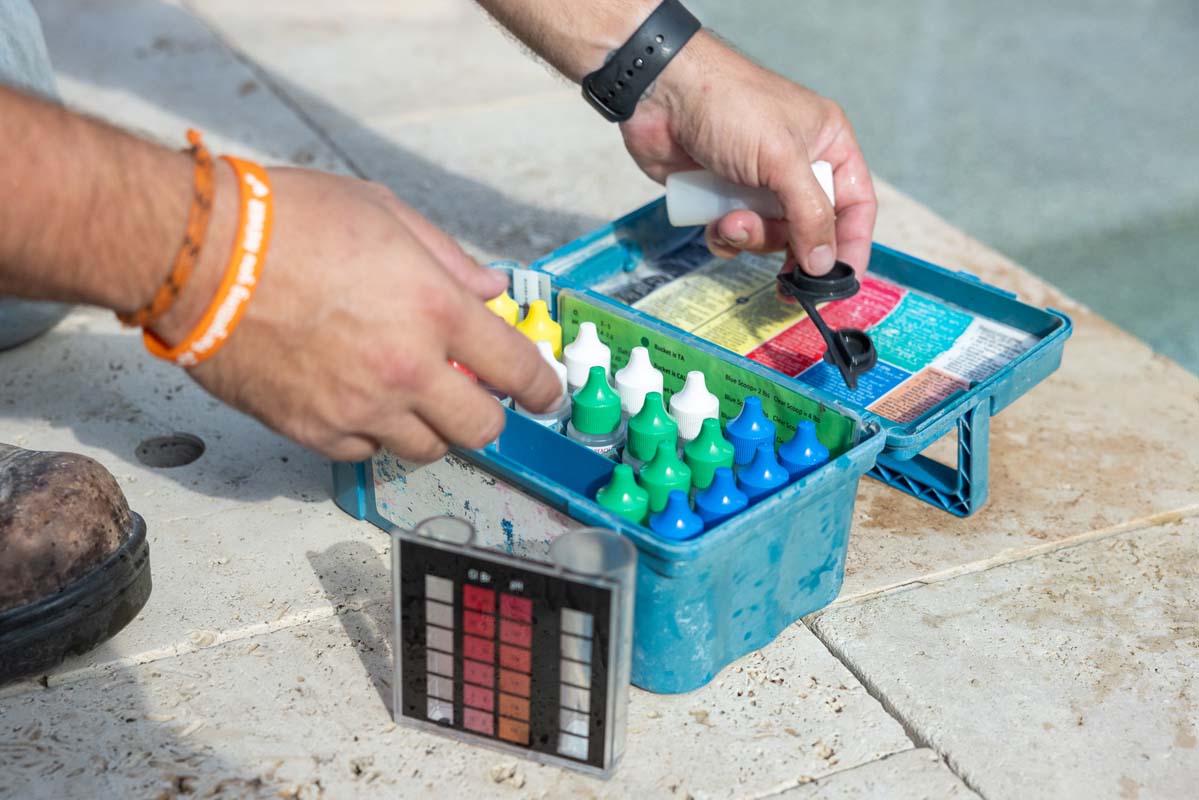
Before adding chemicals, it’s important to test your pool water.
Key readings include:
- Free chlorine
- Combined chlorine
- pH
- Total alkalinity
- Cyanuric acid (stabilizer)
Testing provides a clear picture of what needs to be corrected before treatment begins.
Many homeowners discover that low chlorine or improper pH is the primary reason algae gained a foothold.
How to Fix Green Pool Fast
If you’re wondering how to fix green pool fast, the solution usually involves several coordinated steps rather than relying on a single chemical treatment.
1. Remove Debris
Use a skimmer or leaf net to remove leaves, branches and other organic matter.
Debris provides nutrients for algae while reducing sanitizer effectiveness.
2. Brush Every Surface
Brush walls, steps and the pool floor thoroughly.
Brushing breaks algae loose from surfaces so chlorine can destroy it more effectively.
Don’t overlook ladders, corners and shaded areas where algae often begins growing.
3. Shock the Pool
Applying a chlorine shock treatment raises sanitizer levels high enough to eliminate algae.
Always follow manufacturer instructions regarding dosage based on your pool’s size.
Severe algae blooms may require multiple treatments.
4. Run the Filter Continuously
After shocking, operate the filtration system continuously until the water begins clearing.
The filter removes dead algae and suspended particles that create cloudy water.
Clean or backwash the filter as needed throughout the recovery process.
5. Vacuum the Pool
Once algae settles to the bottom, vacuum it from the pool.
Depending on the amount of debris present, vacuuming directly to waste may help prevent clogging the filter.
Don’t Forget to Balance Water Chemistry
After algae has been eliminated, restoring proper chemical balance is essential.
Maintain recommended levels for:
- Chlorine
- pH
- Alkalinity
- Calcium hardness
- Stabilizer
Balanced water helps prevent future algae growth while protecting pool equipment and surfaces.
Could Metals Be Causing Green Water?
Sometimes green water is not algae at all.
Copper, often introduced through source water, corrosion or certain algaecides, can produce a green tint that resembles algae.
If:
- The water is green but remains clear
- Pool walls are not slippery
- Chlorine levels test normally
Metals may be the cause rather than biological growth.
Professional water testing can identify metal contamination and determine the proper treatment.
Preventing Future Algae Problems
Once your pool is clear again, regular maintenance helps keep it that way.
Good preventive practices include:
- Test water weekly.
- Maintain proper chlorine levels.
- Run the pump daily.
- Clean baskets and filters regularly.
- Brush pool surfaces routinely.
- Remove leaves and debris promptly.
- Balance water chemistry after heavy rain.
Consistency is often the best defense against recurring algae.
When Professional Help Makes Sense
While many green pools can be restored by homeowners, some situations require additional expertise.
Professional pool service may be worthwhile if:
- The water remains green after multiple shock treatments.
- Algae repeatedly returns.
- Equipment is not functioning properly.
- Water chemistry is difficult to stabilize.
- The pool has become severely neglected.
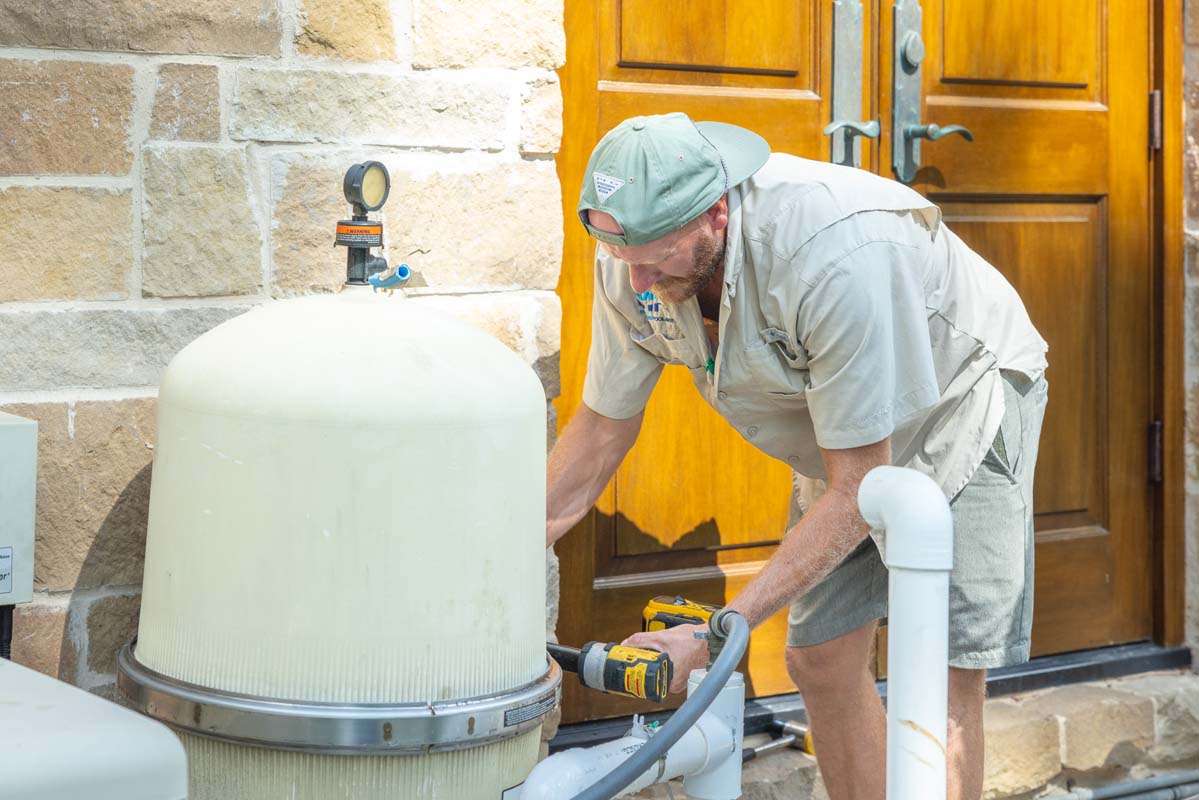
Professional technicians can identify underlying issues that may not be immediately obvious, helping restore water quality more efficiently.
Bring Back the Blue
Seeing green pool water in Houston can be discouraging, but it rarely means the pool is beyond saving. Whether the issue stems from algae, imbalanced chemistry or metal contamination, identifying the cause is the first step toward recovery. If you’ve been asking, why is my pool green or searching for the best way to learn how to fix green pool fast, consistent maintenance and prompt action can usually return your water to a clean, inviting blue.
By testing your water regularly, maintaining proper sanitizer levels and staying ahead of debris buildup, you can spend less time troubleshooting and more time enjoying your pool throughout Houston’s long swimming season.